

Futurism is a dynamic movement that challenged traditional artistic norms and embraced the energy of modern life. Originating in the early 20th century, it left a lasting impact on politics, literature, architecture, and design. In this article, we’ll explore how the Futurism graphic design style captured the spirit of a rapidly changing era.
Key Takeaways:
- Futurism emphasizes dynamism and speed, utilizing innovative techniques like repetition and blurring to convey motion and energy in art.
- Led by figures such as Filippo Tommaso Marinetti, Futurism transcended art, shaping politics, literature, architecture, and graphic design.
- Futurism has influenced the development of other art movements, such as art deco and dadaism.
What is Futurism Graphic Design Style?
Futurism was a twentieth-century social and artistic movement in Milan, Italy. It rejected the past traditions and embraced concepts like speed, machinery, youth, violence, and industrial progress.
Futurist aesthetics centers on technology, which can inspire new and unique expressions of life and self. As a result, futurism challenges traditional humanistic views of identity and subjectivity.
In the Futurism style of graphic design, artists developed innovative techniques to express dynamism and movement. These included blurring, repetition, contrasting colors and shadows, and the use of lines of force.
Also Read: Experiential Graphic Design Examples That Can Blow Your Mind
A Brief History of Futurism Graphic Design Style: 1900-1930s
In 1909, poet and art theorist Filippo Tommaso Marinetti published the Futurist Manifesto. His work inspired young artists like Umberto Boccioni, Giacomo Balla, Gino Severini, and Carlo Carrà, who saw potential in translating his vision, which glorified industrialization, into modern art focused on space and motion.
In 1912, Balla’s Dynamism of a Dog on a Leash captured motion and speed using repetition and overlapping imagery. Although seemingly trivial, his techniques contributed to modern art’s dynamism.
In 1914, Marinetti published Zang Tumb Tumb, a groundbreaking work that captured the chaos of war through fragmented language and explosive typography. It allowed text to be a visual and emotional tool, paving the way for revolutionary approaches in graphic design through its bold use of varied typefaces, forms, sizes, and layouts.
During the 1920s, Futurism was seen as declining, but it also marked the rise of a second wave. This period introduced a new style called Aeropittura (Aeropainting), which focused on the fascination with aerial views from airplanes and tall buildings.
Futurism had a strong influence on later art movements, including Art Deco, Surrealism, and Dada. These influences helped shape modern graphic design.
4 Key Characteristics of Futurism Graphic Design Style
Although there are many interpretations of Futurism, especially within art and design, we can still identify its recurring visual patterns. Here are some of the most common artistic elements of the Futurism movement.
1. Speed and Dynamism
Movement is the central concept of Futurism. Artists often sought to capture the dynamics of action and motion by using techniques like fractured imagery, energetic brushstrokes, turbulent compositions, and forms.
2. Technological and Machine Glorification
Futurism views that humanity should triumph over nature through technology. Thus, the movement openly celebrated man-made concepts such as machines and industry, unlike its predecessor, Art Nouveau, which emphasized natural beauty.
Futurism also promoted themes of nationalism and patriotism, which is why war and violence frequently appear as recurring subjects in futurist art and design.
Also Read: Photopea vs Canva: Best Graphic Design Tool for Your Needs
3. Bright Color Palettes
Bright color palettes dominate Futurism, reflecting a vibrant and multifaceted world. Gradients and color transitions also enhance its dynamic visual style.
4. Geometrical Shapes
The style leans heavily on geometry to represent machinery, digital environments, or the mechanical rhythm of industrial life.
4 Notable Futurism Artworks
These notable works exemplify how the Futurism graphic design style captures movement, technology, and modernity.
1. The City Rises by Umberto Boccioni
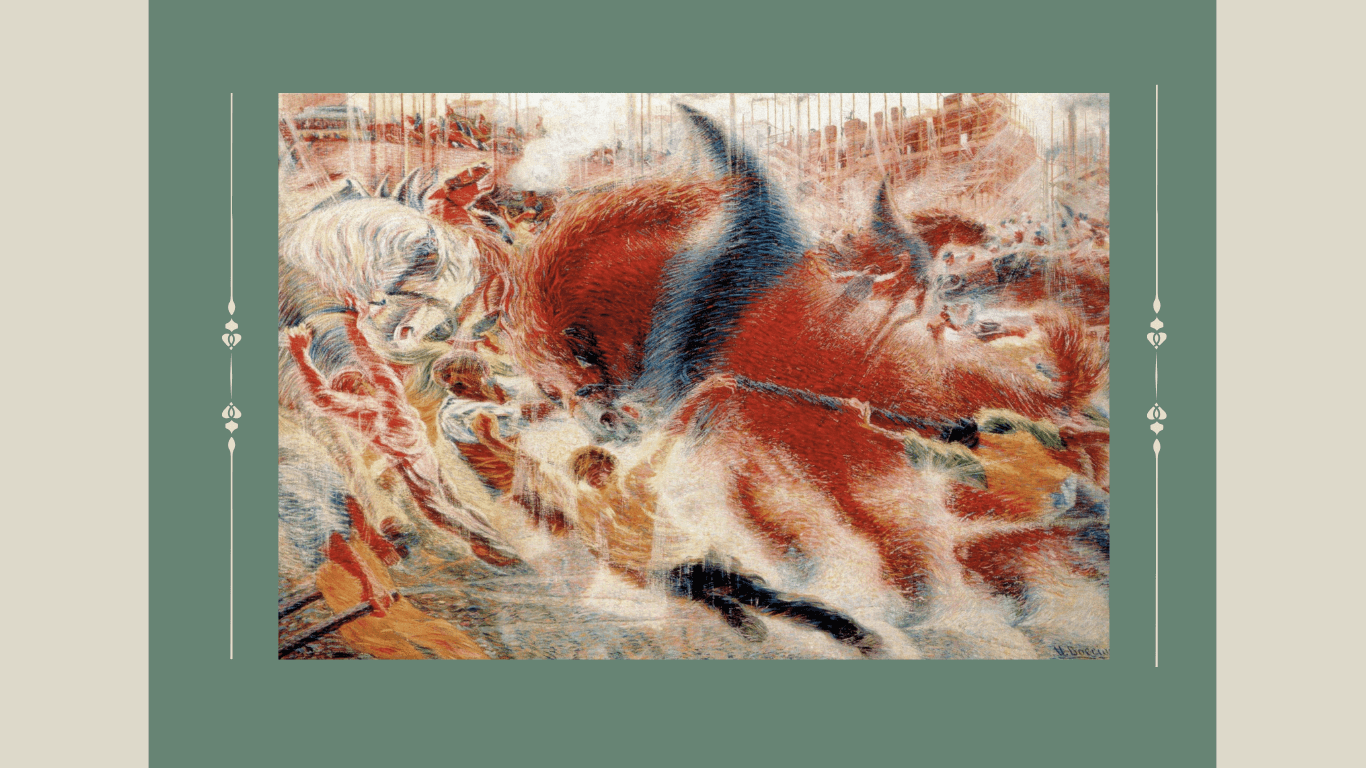
Umberto Boccioni’s The City Rises radiates an overwhelming power and energy. It captures the intense vitality of the modern city and its workers through vivid colors and dynamic forms.
2. Funeral of the Anarchist Galli by Carlo Carrà

This painting by Carlo Carrà pays tribute to Angelo Galli, who lost his life during a workers’ strike in Milan. It captures the moment when police on horseback violently attacked the funeral procession, highlighting the tension between anarchists and authorities.
Also Read: How to Improve Your Graphic Design Skills in a Simple Way?
3. The Cyclist by Natalia Goncharova
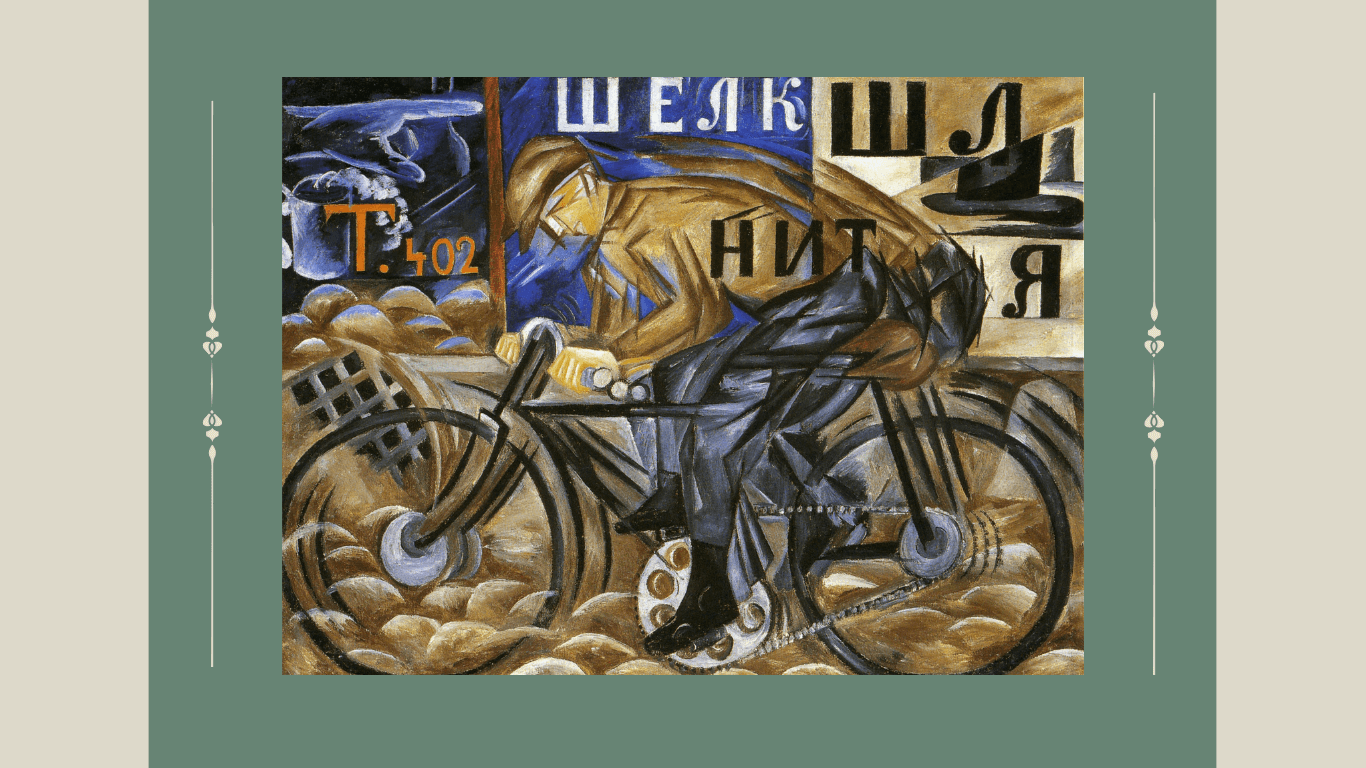
Natalia Goncharova, a key figure in Russian Futurism, explores movement and modern life in The Cyclist. This example of Futurism graphic design shows a cyclist passing bold, typographic storefront ads. Words like “hat,” “silk,” and “thread” hint at Goncharova’s background in costume design.
4. Aeroritratto di Mussolini Aviatore by Alfredo Ambrosi

Aeropainting was a key form of second-generation Italian Futurism, admiring flight and aerial views. In this work, the artist blends a bird’s-eye view of Rome with Mussolini’s profile, symbolizing his deep connection to the city and his role in shaping the nation’s identity.
Futurism’s Influence on Other Movements
The futurism graphic design style has influenced several other art movements. Here are a few notable examples.
1. Art Deco
Art Deco features bold, geometric shapes like triangles, zigzags, and chevrons. Influenced by Italian Futurism, it shares a focus on speed and movement. Art Deco adopted parallel lines and tapering forms to create a sleek, dynamic look.
2. Dadaism
Dadaism arose as a reaction against the atrocities of World War I, positioning itself as an anti-art movement that challenged traditional artistic norms. It embraced absurdity and nonsense, often using humor or satire to challenge political views. While its style contrasts sharply with Futurism, both movements shared a common goal to reject traditional artistic norms.
Also Read: Master These 8 Elements of Graphic Design to Elevate Your Skills!
From Historical Movement to Modern Design
The futurism graphic design style holds significant historical value, bridging early 20th-century artistic rebellion with today’s modern visual language. Its bold embrace of motion, technology, and innovation inspires contemporary design to shape how we communicate in the digital age.If you are interested in adopting futurism in your design, you can start with good typography. Bold typography, like slab serif, is great for Futurism. Good for you, Rantautype Studio has you covered. With a selection of fonts for Futurism style, you create designs that feel fresh, modern, and full of energy!